Towering granite cliffs, waterfalls, giant sequoias and mountain views make Yosemite National Park an incredible place to plan an elopement. But the experience can look completely different depending on where you explore and what time of year you visit.
Maybe you picture exchanging vows beneath Yosemite’s massive granite walls before spending the day exploring the valley. Or maybe you’d rather head toward higher elevations, pack a picnic and build your day around quieter mountain scenery.
This guide covers the important pieces of planning a Yosemite elopement, including permits, seasonal access, weather and choosing locations that fit the experience you actually want.


Why Elope in Yosemite National Park?
Yosemite gives you something that’s hard to replicate anywhere else. Massive granite cliffs rise above the valley, waterfalls spill down the mountainsides, and forests, meadows and high-elevation views can all become part of the same elopement experience.
What I love most about Yosemite is that your day doesn’t have to revolve around one ceremony spot. You can exchange vows, explore somewhere completely different afterward, stop for a picnic or simply leave room to enjoy the scenery together without rushing from one photo location to the next.
It’s especially perfect for couples who want their elopement to feel adventurous without necessarily making the entire day about a difficult hike. There are incredible views throughout the park with different levels of accessibility, which gives us room to build an experience around you rather than forcing your day to fit a specific location.
Yosemite Elopement Permits
A Special Use Permit is required for wedding and commitment ceremonies held within Yosemite National Park. Your ceremony location, group size and date can affect where you’re able to hold your ceremony, so this is something to consider early in the planning process.
Yosemite has designated ceremony locations with their own group-size and seasonal restrictions. Couples with fewer than 11 people have additional location flexibility, although ceremonies still aren’t permitted in open meadows or riparian environments. Your permit also doesn’t give you exclusive use of the location, so other park visitors may still be nearby.
The park currently accepts wedding applications up to one year before the event and requires applications more than 21 days before the ceremony. Because requirements, fees and procedures can change, always check Yosemite’s current wedding information before applying.
And you won’t have to figure all of this out alone. Permit guidance is part of the planning support I provide my elopement couples.


How to Get to Yosemite National Park
Yosemite National Park is located in California’s Sierra Nevada, and your travel time will depend on which part of the park you’re heading toward. If you’re flying in, Fresno Yosemite International Airport is one of the closest commercial airport options, while San Francisco, Oakland, Sacramento and other larger airports are farther away but may offer more flight options.
Yosemite has several entrances, so it’s important to plan your route around your elopement locations and where you’re staying rather than simply entering “Yosemite” into your GPS. The National Park Service specifically recommends checking park maps and current road conditions because GPS directions aren’t always reliable in and around the park.
Seasonal road closures can also dramatically change travel times. Tioga Road and Glacier Point Road typically close during the snowy season, which can make some areas inaccessible by car until late spring or early summer.
When we build your elopement timeline, we’ll account for drive times between locations so your day still has room to slow down and actually enjoy Yosemite instead of spending it racing from one viewpoint to another.


Best Time to Elope in Yosemite National Park
Summer
Summer gives you the greatest access to Yosemite, especially if you want to explore higher-elevation areas of the park. Tioga Road and Glacier Point Road are typically open during this season, although exact opening dates depend on the previous winter’s snowpack.
The tradeoff is crowds. Summer is Yosemite’s busiest season, so sunrise, weekdays and thoughtful location choices can make a huge difference when planning an intimate elopement.
Fall
Fall can be an incredible balance between accessibility and fewer visitors. September and early October often still allow access to higher elevations, while cooler temperatures can make exploring more comfortable.
But fall in Yosemite is unpredictable. Snowstorms can temporarily close roads, and Tioga Road and Glacier Point Road eventually close for winter. October can be beautiful, but I wouldn’t plan an elopement around the assumption that every area of the park will definitely be accessible.
Winter
Winter completely changes Yosemite. Snow can create a quieter, dramatic landscape, and Yosemite Valley remains accessible throughout the year. However, many higher-elevation roads and locations become inaccessible, and tire chains may be required depending on conditions.
If you’re dreaming about a snowy Yosemite elopement, flexibility is important. Your location options will be more limited, but the tradeoff can be a much quieter experience than peak summer.
Spring
Spring is waterfall season in Yosemite, with snowmelt bringing some of the park’s waterfalls to life. The valley begins transitioning into warmer weather while higher elevations may still be covered in snow.
That also means access varies dramatically by elevation. Tioga Road often doesn’t reopen until late May or June, and heavy snow years can delay access even longer. Spring can be beautiful for an elopement, but your plans should be built around the areas that are actually accessible at that time of year.
There isn’t one perfect month to elope in Yosemite. The best time depends on whether you care most about waterfalls, high-elevation access, snow, fewer crowds or having the widest variety of locations available.


Accessibility + Weather for a Yosemite Elopement
One of the best things about Yosemite is that an incredible elopement doesn’t have to mean completing a difficult hike. Some locations offer beautiful scenery with relatively easy access, while others require hiking, longer drives or seasonal roads to reach.
Weather can change those plans quickly. Snow, storms, wildfire conditions and seasonal road closures can affect which areas of the park are accessible, especially at higher elevations. Checking current conditions before your elopement—and building flexibility into your plans—is important.
That’s also why I like having a backup plan. If weather or road conditions make our original location inaccessible, we can adjust without making your entire elopement feel like Plan B.
Comfortable layers, sturdy shoes and clothing you’re actually willing to adventure in can go a long way. You can always change shoes or add layers as we move throughout the day.


Things to Do During Your Yosemite Elopement
Your Yosemite elopement can be about so much more than exchanging vows and taking photos. Building an activity into your day gives you time to actually experience the park together and makes your elopement feel more like an adventure than a photoshoot.
Depending on the season and the kind of day you’re dreaming about, you could hike to a viewpoint, pack a picnic, explore one of Yosemite’s trails, watch the sunset beneath the granite cliffs or stay out after dark for stargazing.
Your activities don’t have to be complicated or extreme, either. Grab coffee together in the morning, stop somewhere beautiful for lunch, bring along something you love doing together or simply leave time in the timeline to wander without needing to rush to the next location.
The goal isn’t to fill every minute of your elopement day. It’s to choose a few things that feel like you and leave enough space to actually enjoy them.


Where to Elope in Yosemite National Park
Choosing where to elope in Yosemite isn’t just about finding the prettiest view. Different areas of the park offer completely different scenery, accessibility and seasonal availability, so your location should fit the kind of experience you want to have.
Yosemite also has specific rules about where wedding ceremonies can take place. Your ceremony location may be different from some of the places we explore for portraits throughout the rest of your day, which gives us plenty of room to build variety into your experience.
Yosemite Valley
If towering granite cliffs, waterfalls and classic Yosemite scenery are what made you fall in love with the park, Yosemite Valley is probably where you’ll want to spend part of your elopement day. The valley offers some of Yosemite’s most recognizable views along with several designated ceremony locations.
It’s also one of the busiest areas of the park, so time of day matters. An early start can give your ceremony or portraits a completely different feeling than arriving during the busiest part of the day.
Glacier Point Area
For couples dreaming about expansive mountain views, the Glacier Point area offers a completely different perspective of Yosemite. From higher elevations, you can look across Yosemite Valley toward Half Dome and the surrounding high country.
Access is seasonal, though. Glacier Point Road closes when winter conditions arrive and reopening depends on snowpack and road conditions, so this area works best when your plans allow for that seasonal uncertainty.
Tenaya Lake + Yosemite High Country
Yosemite’s high country feels completely different from the valley. Think alpine lakes, granite landscapes and a quieter mountain atmosphere that can make your elopement feel like an entirely different adventure.
Tenaya Lake is one of Yosemite’s designated ceremony areas, but access depends on Tioga Road being open. That makes the high country a seasonal option rather than something I’d build a winter or early-spring elopement around.
Yosemite’s Sequoia Groves
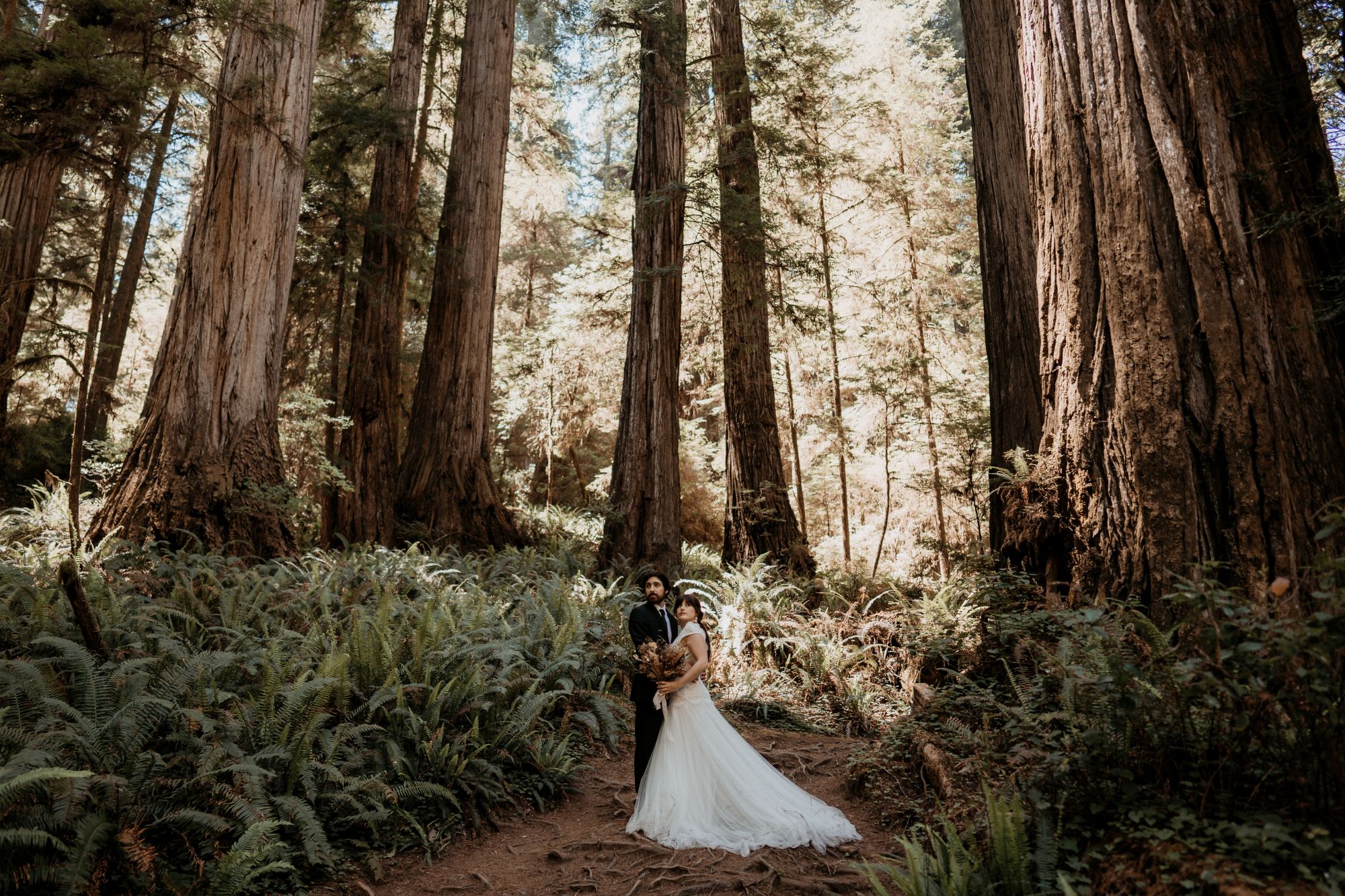
If towering trees feel more like you than sweeping mountain overlooks, Yosemite’s sequoia groves offer another completely different setting. Walking beneath giant sequoias can add a quieter, forest-focused part of the day and pair beautifully with another Yosemite location.
Ceremony rules around the sequoias are especially important because protecting their roots and surrounding vegetation comes first. If this kind of setting is on your list, we’ll choose locations and activities that keep your experience Leave No Trace friendly.
You don’t necessarily have to choose just one Yosemite setting. Depending on the season, your coverage and drive times, we can build a day that lets you experience more than one side of the park without turning your elopement into a race between photo locations.


Ready to Plan Your Yosemite Elopement?
If Yosemite feels like the place where you want to exchange vows, your elopement can be so much more than choosing a beautiful ceremony spot. We can build a day around the parts of the park you’re most excited to experience, whether that means watching sunrise beneath the granite cliffs, exploring an alpine lake, hiking together or ending the day somewhere incredible for sunset.
As your photographer, I’ll help you navigate locations, permits and timeline planning so your day feels intentional without feeling over-planned. The goal is to create an elopement that leaves room for the big views, the quiet moments and everything that happens in between.
Ready to start dreaming up your Yosemite elopement? Let’s plan your adventure.


Comments